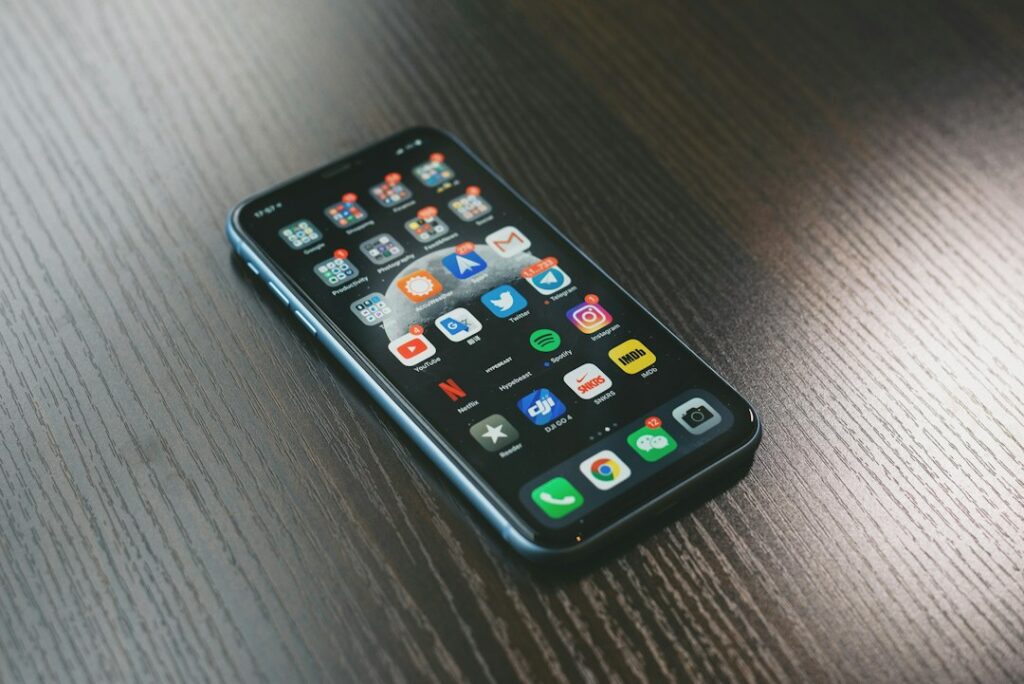
For years, a “digital self” mostly meant the traces you left online: profiles, photos, search history, emails and accounts. An AI personal assistant changes the idea because the software does not merely represent you. It can increasingly act for you.
It can search, draft, organize, compare, remember preferences and interact with other software. The line between your information and an agent operating on your behalf is beginning to matter.
Assistants are moving from answers to actions
The earliest mainstream chatbots waited for a question and produced a response. Newer agentic systems can work through multiple steps, use tools and maintain context while trying to complete a task.
OpenAI describes its Agents API as infrastructure for long-running agents that can use files, tools and subagents, while Anthropic defines an agent as a model that directs its own processes and tool use toward a user’s goal.[1][2]
That shift makes the assistant more useful. It also gives it more agency inside your digital life.
Memory makes the relationship feel different
A stateless chatbot starts every conversation nearly from scratch. A system that remembers preferences, projects and recurring context can behave more like an ongoing assistant.
The practical advantage is obvious. You should not have to re-explain your priorities every time.
But persistence changes the privacy question. The more useful the assistant becomes, the more personal context it may need. Users therefore need meaningful control over what is remembered, what is connected and what the system is allowed to do.
Your assistant can become a proxy
Imagine an AI that drafts your replies, schedules meetings, prepares documents, researches purchases and handles routine administrative work. At some point, other people are interacting partly with a system that is acting in your name.
This is not the same as a traditional automation. The agent may have discretion over how to accomplish the goal.
That creates questions about responsibility. If the assistant sends the wrong message, approves the wrong change or misrepresents your intent, who owns the mistake? In ordinary life, the practical answer will usually still be the person who delegated the task.
Permissions become part of identity
Anthropic’s work on trustworthy agents emphasizes the tension between autonomy and human control. Users need to decide which tools an agent can access and which actions require approval.[2]
Those permissions define the boundary of the digital self. Reading your calendar is one level of access. Sending invitations is another. Viewing a bank statement is different from moving money.
The useful assistant is not the one with unlimited access. It is the one with enough access to help without quietly acquiring authority you did not intend to delegate.
People are already using chatbots for more personal purposes
The relationship is not limited to productivity. Pew Research Center found in 2026 that 10% of U.S. adults said they had used AI chatbots for emotional support or advice, while 4% reported using them for companionship. Among adults under 30, the shares were higher.[3][4]
Those numbers remain far smaller than use for information or work, but they show that some people are already treating AI systems as more than software utilities.
Voice and avatars make the boundary blurrier
Once an assistant can speak in a natural voice, appear as an avatar and retain a persistent personality, it becomes easier to experience the system as a social presence.
That does not mean the system has a self in the human sense. It means the interface is borrowing more signals that humans normally associate with one.
The distinction matters because people are remarkably good at forming relationships with responsive things.
A digital self could become portable
One possible future is that your personal context becomes an asset you control and move between services. Instead of teaching every new app who you are, an authorized assistant could carry preferences, history and working context across tools.
That could make software dramatically easier to use. It could also make identity, consent and data portability much more important than they are today.
The assistant should remain an assistant
The best version of this future is not a digital clone making unsupervised decisions. It is a system that reduces friction while keeping the person in control.
That means clear boundaries: what the assistant knows, what it can access, what it can do automatically and which decisions must come back to you.
The more capable AI becomes, the less useful it is to think only about intelligence. Authority matters too.
Where your digital self ends
An AI personal assistant can increasingly represent your preferences and execute your intentions across software. That makes it feel like an extension of you while remaining something fundamentally separate.
The important design question is not whether the assistant can act without you. It is whether you can always understand, limit and reverse what it does in your name.
As AI becomes more personal, control may become the feature that matters most.
Sources
[1] OpenAI, “Introducing the Agents API”
[2] Anthropic, “Trustworthy agents in practice”
[3] Pew Research Center, “Search and work are the most common uses for chatbots”
[4] Pew Research Center, “How Americans’ opinions and use of AI differ by age”
Build your AI fluency.
In the AI Era™ Professional Learning is a five-level certification pathway designed to help professionals move from understanding AI to applying it with greater confidence, productivity, and sophistication.