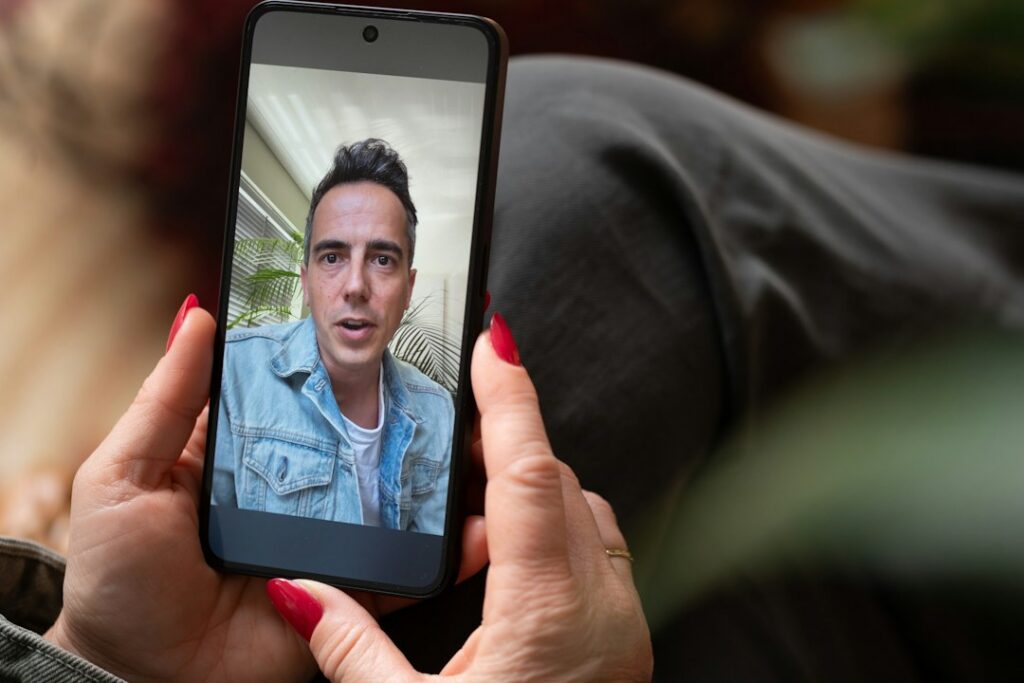
There is a peculiar new category of celebrity online: people who have followers, brand partnerships, wardrobes, personalities and carefully managed public lives, but no childhood, no apartment and no physical body.
AI influencers and other virtual personalities are becoming part of the ordinary media landscape. Some are stylized characters. Others are designed to look convincingly human. What matters is that the audience relationship can be real even when the person is not.
Virtual influencers are becoming an established format
Academic research increasingly treats virtual influencers as a distinct form of marketing rather than a novelty. A 2025 review defined them as digital personas created through computer-generated imagery and/or AI, ranging from humanlike figures to more imaginative forms.[1]
That breadth matters. The category is not limited to one uncanny digital model pretending to be a person. It includes characters that are openly fictional and brands built around synthetic identities.
Why brands are interested
A virtual personality can be controlled with unusual precision. It does not arrive late to a shoot, contradict a campaign brief or suddenly become unavailable. Its appearance can be changed, its content can be localized and its schedule can be managed like a media property.
That can make the economics appealing, especially as generative tools reduce the cost of producing images, video and voice.
But control is not the same as credibility.
Authenticity is the central problem
Influencer marketing has always depended on a strange blend of performance and intimacy. Audiences know the content is curated, but the person behind it is still real.
Virtual influencers complicate that bargain. Research published in 2026 describes persistent questions around emotional authenticity, trust and the ethics of simulated social interaction.[2]
A synthetic personality can appear vulnerable, enthusiastic or affectionate without experiencing any of those emotions. That gap is not automatically deceptive if the audience understands the character, but disclosure becomes important.
People can form real reactions to unreal people
The fact that a character is fictional does not make the response fictional. Audiences have always cared about invented characters in books, television and games.
Social media changes the relationship because the character can post daily, reply, endorse products and imitate the rhythms of a real person. The line between entertainment and relationship becomes less obvious.
A 2026 meta-analysis of virtual-influencer marketing found the category sufficiently established to support broad experimental comparison with human influencers, reflecting how quickly the format has matured.[3]
AI makes synthetic personalities easier to scale
Older virtual influencers required significant design and production work. Generative AI lowers those barriers. A small team can create imagery, scripts, voices and increasingly convincing video around one consistent persona.
That means the internet can support far more synthetic identities than it could when each one required a large creative operation.
The likely result is not that every influencer becomes artificial. It is that the cost of creating another personality falls dramatically.
The business model can extend beyond sponsorships
A virtual character can sell products, license its likeness, appear in entertainment, host branded content or become an interface for an AI service. It can exist across languages and platforms without the limitations of a human schedule.
That begins to look less like influencer marketing and more like intellectual property.
The most successful synthetic personalities may therefore be managed more like entertainment franchises than social-media accounts.
Disclosure will shape trust
The ethical question is not simply whether a virtual influencer exists. It is whether audiences understand what they are interacting with.
Research reviews have repeatedly identified transparency and disclosure as central issues affecting trust and engagement.[4]
That suggests an important difference between fiction and deception. A clearly fictional character can still be compelling. A synthetic person presented in a way that encourages people to believe they are human creates a different relationship.
Real people may become more valuable too
The rise of synthetic personalities could create a countertrend. As perfectly controlled digital people become common, visible imperfection and verifiable humanity may become more distinctive.
Audiences may place more value on creators whose lives, expertise and identities are difficult to manufacture.
AI influencers do not eliminate authenticity. They may make us more conscious of how much we were relying on it.
The internet is gaining a new population
Social media used to be populated by people, companies and obvious fictional characters. That taxonomy is breaking down.
There will be human creators using AI heavily, synthetic creators managed by humans, autonomous characters, brand-owned personalities and hybrids that do not fit neatly into any category.
The interesting question is not whether these people are “real.” They are not. The interesting question is what happens when their influence is.
Sources
[1] Journal of Business Research, “Virtual influencers: Definition and future research directions”
[2] AI & Society, “Simulated influence, real impacts”
[3] Journal of the Academy of Marketing Science, “Virtual influencer marketing: A meta-analytic review”
[4] Acta Psychologica, “Authenticity, ethics, and transparency in virtual influencer marketing”
Build your AI fluency.
In the AI Era™ Professional Learning is a five-level certification pathway designed to help professionals move from understanding AI to applying it with greater confidence, productivity, and sophistication.